Island Economy Pulse: Tourism Drives Guam's Financial Health
"The ocean doesn't care about your budget, but your economy certainly does."
Guam operates within a unique economic framework that distinguishes it from both independent nations and integrated U.S. states. Its status as a territory creates a specific set of dependencies and opportunities that define its fiscal health.
* Guam's economy is highly sensitive to external factors, mirroring the dynamics of a U.S. Territory. * The structure is heavily reliant on specific sectors, such as tourism and federal presence. * Understanding these fluctuations is key to grasping the unique economic reality of the archipelago.
What exactly defines Guam's economy? A quiet morning in Hagåtña reveals a landscape where modern administrative buildings sit alongside remnants of Spanish colonial architecture. The salt air carries the weight of a complex history, where local governance intersects with federal oversight.
Guam's status as an unincorporated territory of the United States means its economic relationship with the mainland is fundamentally different from that of Hawaii or American Samoa. While it is part of the U.S.
political fabric, it lacks the same level of representation and fiscal autonomy found in the states. This creates a unique "territorial economy" where local policy is often intertwined with federal mandates and large-scale federal spending.
Unlike a state, which might have a more diversified internal tax base and direct federal representation, Guam must navigate a landscape of high import costs and limited domestic industry. The economy is essentially a subset of the larger U.S.
macroeconomic environment, yet it is subject to local volatility that can hit harder due to its isolation. This reliance on external influences—both through federal funding and international trade—forms the backbone of its economic identity.
When I first walked through the capital, I realized that every government building felt like a bridge between local traditions and federal rules. It is a delicate balancing act that impacts every dollar spent on the island.
But how do we see this complexity in the actual numbers?
What did the 2018 GDP numbers actually show? Walking through the Tumon business district, one can see the physical manifestations of economic shifts in the construction of new hotels and the presence of retail hubs. The transition from one fiscal year to the next often feels like a sudden change in the tide.
Analyzing the period around 2018 provides a window into how a small, island-based economy reacts to global shifts. While specific year-over-year growth rates for that exact window show the volatility of a service-based economy, we can see the broader trajectory of recovery and fluctuation.
For instance, looking at later benchmarks, World Bank data shows that Guam recorded GDP growth of 5.1% in 2022. This demonstrates that the economy is capable of significant surges when external drivers—like a rebound in travel or changes in federal presence—align.
The volatility observed in the late 2010s was often driven by the tug-of-war between rising costs of living and the fluctuating influx of visitors.
Because the GDP is so heavily weighted toward services and tourism, any disruption in global travel or changes in regional stability impacts the total output almost immediately. This sensitivity is a hallmark of the territorial economy, where the "product" is often the location itself.
If the GDP can swing so wildly based on a single industry, what else should we be looking at to judge economic health?
Key Economic Indicators: Beyond the GDP Figure
A local resident checks their phone at a cafe, perhaps looking at job postings or news regarding the local labor market. The numbers on a screen represent the real-world struggle of balancing supply and demand in a limited space.
According to World Bank data, Guam recorded an unemployment rate of 5.6% in 2025.
To understand the health of Guam, one must look past the headline GDP figure and examine labor and movement. For example, looking at recent data, the World Bank recorded an unemployment rate of 5.6% in 2025.
Comparing this to other periods, such as 2022 when a metropolitan statistical area's unemployment rate was 3.1% (ranking 171 out of 389 U.S. metropolitan areas), we see how much local labor markets can swing based on seasonal or sectoral changes. Another vital indicator is the movement of people.
In 2020, the World Bank recorded that Guam saw 328,000 international tourist arrivals.
In a territory where the economy is built on hospitality, these arrival numbers are often more telling of immediate economic health than traditional industrial output. When arrivals drop, the local economy feels the squeeze almost instantly, affecting everything from retail to construction.
However, the sheer weight of the tourism sector creates a specific kind of risk.
The Interplay of Tourism and Local Economy
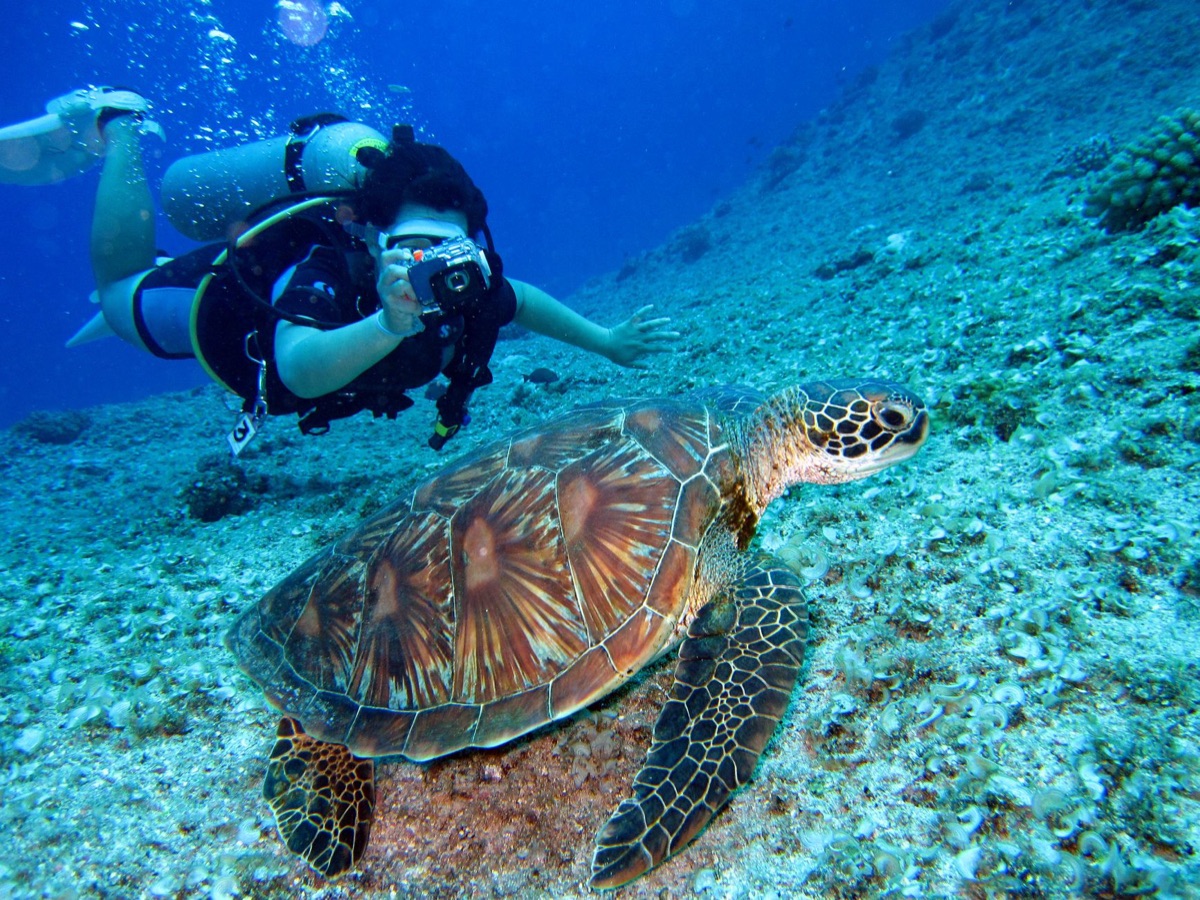
The sun sets over Tumon Bay, casting a golden light on the luxury resorts that line the coast. The sound of waves hitting the shore is constant, much like the presence of visitors who fuel the local economy.
Tourism is not just a sector in Guam; it is the lifeblood of the local economy. The revenue generated from international visitors supports a vast network of local businesses, from transportation services to food and beverage wholesalers.
This creates a multiplier effect: a tourist staying at a resort spends money at a local restaurant, which in turn pays local employees, who then spend their wages in the local community.
However, this reliance creates a precariousness. Because the economy is so heavily weighted toward visitor spending, it is vulnerable to global events, such as pandemics or changes in airline routes. The local economy essentially operates on a "pulse" dictated by international travel trends.
While this brings significant wealth into the territory, it also means that the local population is highly susceptible to external shocks that are entirely outside of their control.
But why does the history of the island make this current structure so difficult to change?
Historical Context: Echoes of Past Administrations on Present Structure
In the quiet corners of a museum or a historic plaza, the layers of time are visible in the stone walls and the diverse faces of the people. The past is never truly gone; it is the foundation upon which the current economy is built.
According to the Pew Research Center, the religious demography of Guam in 2010 was as follows: In 2020, the Vatican claimed that 87.72% of the population was Catholic, with 54 priests and 64 nuns across 27 parishes.
The current economic structure is deeply influenced by historical administrative shifts. From the Spanish period to the Japanese occupation and the subsequent American administration, each era left a footprint on land use, legal frameworks, and social organization.
In 2020, the Vatican claimed that 87.72% of the population was Catholic, reflecting a deep-seated cultural and social structure that influences local labor and community organization.
These historical realities dictate how land is managed and how the population interacts with the government. The transition from a colonial outpost to a U.S. territory created a specific legal and economic architecture that still governs how business is conducted and how federal funds are allocated.
Understanding this history is essential to understanding why certain industries dominate and why the economy operates within its current boundaries. But as we look toward the horizon, the question of survival becomes more pressing.
Future Outlook: Navigating Volatility in a Small Island Economy
A young entrepreneur sits in a modern co-working space, looking out toward the ocean. They are planning for a future that requires both local innovation and global connectivity.
The challenge for Guam lies in balancing its current strengths with the need for long-term sustainability. Being a small, geographically isolated economy means that diversification is not just a luxury—it is a necessity.
While tourism and federal presence provide a strong base, the territory must look toward emerging sectors like technology or sustainable blue economies to mitigate the risks of volatility.
To navigate this transition, leaders and citizens can follow a general framework for economic resilience:
- Diversify Revenue Streams: Reduce the heavy reliance on single-sector tourism by developing niche industries like maritime technology.
- Strengthen Local Supply Chains: Minimize the high cost of imports by supporting local agriculture and small-scale manufacturing.
- Invest in Human Capital: Enhance vocational training to ensure the local workforce can pivot during economic shifts.
- Foster Regional Partnerships: Build stronger economic ties with neighboring Pacific nations to create a more stable regional network.
Future stability will depend on how well Guam can navigate the complexities of its relationship with the United States while fostering local resilience.
As global travel patterns change and the geopolitical importance of the Pacific grows, Guam will continue to face a tug-of-war between opportunity and vulnerability.
Building a more robust, diversified economy will be the key to ensuring that the prosperity of the island is not entirely dependent on the whims of external markets.
#


Comments 0