31 Months of Conflict: Guam's Pivotal Mid-Century Shift
"To understand the soul of the island, one must look past the turquoise waters and see the layers of history etched into the limestone."
The transition from an indigenous way of life to a strategic American territory created a unique social fabric that defines Guam today. This guide explores how a century of geopolitical shifts shaped a modern society that still holds onto its original heart.
Key Takeaways * The transition from indigenous Chamorro culture through various colonial influences shaped a resilient modern identity. * The 1899 transition marked a critical juncture that led to sustained geopolitical shifts.
* Modern Guam balances deep-rooted Chamorro traditions with administrative realities. * Contemporary society reflects a complex layering of cultures, history, and governance.
What was the original heartbeat of the islands? At dawn, a fisherman pulls his heavy dugout canoe onto the warm sand, his hands calloused from years of navigating the turquoise swells.
The sun rose over the limestone cliffs of Hagåtña long before any foreign flag was planted in the soil. For centuries, the Chamorro people lived in a sophisticated society, navigating the vast Pacific with incredible maritime skill and establishing tight-knit clan structures.
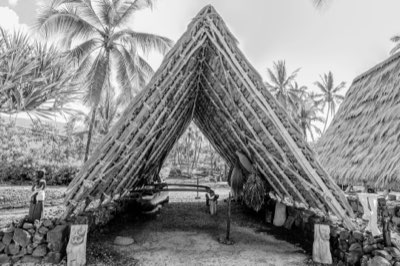
The original inhabitants built a life centered on the sea and the land, utilizing latte stones to support their homes. This period was defined by a deep connection to the natural environment and a social hierarchy that honored lineage and community strength.
While external forces would eventually arrive, this indigenous foundation remained the bedrock of the island's identity.
The arrival of outsiders would soon change the trajectory of the islands forever.
What was this period of transition and conflict? The horizon changed forever when Spanish explorers reached the islands, introducing new governance and religious structures that would blend with local customs. However, the most turbulent shifts occurred during the mid-20th century when global conflicts reached the shores of the Pacific.
On December 8, 1941, just hours after the attack on Pearl Harbor, Guam was captured by Japanese forces. This period of occupation lasted approximately 31 months, creating a period of extreme hardship for the local population.
Some historians estimate that war violence killed 10% of Guam's then 20,000 population during this era of upheaval. The occupation finally ended when American forces recaptured the island on July 21, 1944, a moment now commemorated as Liberation Day.
These decades of occupation and liberation reshaped the social landscape and the relationship between the people and the governing powers.
Building a modern territory
By the turn of the 20th century, the administrative landscape had shifted significantly following the 1899 transition. As the United States solidified its presence, the island began to transition from a colonial outpost to a strategic American territory, setting the stage for modern governance.
The physical reality of the territory is defined by its 210 square miles of land, resulting in a population density of approximately 775 per square mile. During this period of transition, the social fabric also became deeply intertwined with religious identity.
For example, the religious demography of the island saw a profound shift toward Catholicism; by 2020, the Vatican claimed that 87.72% of the population was Catholic, with 54 priests and 64 nuns serving across 27 parishes.
This blend of American administrative structure and deep Catholic faith created a unique societal framework.
Economic growth and the modern landscape
Walking through the bustling streets of Tumon today, it is easy to see how the economy has evolved from subsistence to a globalized service-based model. The transition from a military-centric economy to a tourism-driven one has brought both prosperity and rapid social change.
The economic metrics of the territory reflect this modernization. In 2022, the GDP per capita was reported at US$41,833 according to World Bank data.
While the global pandemic caused fluctuations, the resilience of the tourism sector was evident when international tourist arrivals reached 328,000 in 2020. This influx of visitors has created a diverse, multicultural environment where local businesses and international chains coexist.
While the economy has grown, the challenge remains to balance this wealth with cultural preservation.
Preserving the cultural DNA
In the shadow of modern shopping centers and luxury resorts, the spirit of the Chamorro people remains vibrant. It is found in the way families gather for meals, the preservation of the Chamorro language, and the respect shown to elders.
The cultural DNA of the island is not a relic of the past but a living, breathing part of daily life. Whether it is through traditional dances, the preparation of local delicacies, or the honoring of ancestral stories, the indigenous roots remain the guiding force of the community.
This continuity ensures that despite a century of administrative changes, the heart of Guam remains distinctly itself. #
Comments 0